Showing posts with label WebMD. Show all posts

Sunday, April 12, 2015

Myths about Bodily Fluids -

WebMD has a great quiz that you can visit using the link under sources.   It's all myths about bodily fluids.  I'm going to give you the highlights from this quiz.

Image result for sweat
1. Sweat has no smell. True or false?
Come to find out sweat itself does not have a smell.  The bacteria on your skin creates the smell.
Image result for spit
2. How much spit does your mouth make every day?  A pint, 2-4 pints, 5-7 pints?
Your mouth creates 2-4 pints of saliva per day.  That seems like a lot but when you think about what all saliva is used for it's not that much.
Image result for apple juice
3. Can I drink pee?
While urine is sterile and contains mostly water you could pass on a nasty infection or re-digest things your body was trying to get rid of.
Image result for bile
4. What body part makes bile? Liver, Kidneys, or Bladder?
Bile is made by the liver and stored in the gall bladder. Bile is used to help you digest food and eliminate waste.
Image result for runny nose
5. Only your nose contains mucus. True or False?
Mucus is also found in your mouth, lungs, intestines, and stomach.  It's the body's internal lubricant.
Image result for semen
6.  How much sperm is in semen?  Less than 1%, Less than 10%, less than 20%.
Only 1% of semen is made up of sperm.  Semen also contains water, sugar, acids, protein, and zinc.
Image result for colostrum
7.  Women produce "practice milk" before really lactating. True or False?
"Practice milk" or colostrum is produced the first few days after the baby is born.  It can be thick and yellow or thin and watery.  It contains ingredients that help keep the baby healthy and protected like antibodies.
Image result for cry
8. You can cry with your nose.
Tears come from glands under your upper eyelids.  Some glands drain out through tiny tubes between your eyes and nose.  If you are crying particularly hard tears can come out of all the glands at once causing some tears to come out of your nose.
Image result for inner ear
9.  Fluid in your ears can affect your balance. True or False?
Inside the inner ear there is a liquid filled pouch-like sac.  It holds the correct amount of fluid so you can move and maintain balance.  If fluid builds up in your ears it can cause vertigo or dizziness.
Image result for pale urine
10. Pale urine means your body has excess water to get rid of.
Pale urine indicates you are well hydrated.  If your urine is dark then you are dehydrated.
Image result for vaginal discharge
11.  The vagina cleans itself with discharge.
Yes!  The vagina is self cleaning.  Discharge helps keep it clean and moist and prevent infection.  Normal discharge should be clear, off-white, or white.  Discharge should never itch or burn or be green or yellow or have a strong smell.  If it does, go see a doctor.

Sources:
http://www.webmd.com/a-to-z-guides/rm-quiz-body-fluids?ecd=wnl_spr_032115&ctr=wnl-spr-032115_nsl-ld-stry&mb=1fvEi6fjCQIExn%40Mx3jvsOHnVev1imbC3AXI5mexUT0%3d

Tuesday, April 7, 2015

Sleep Disorders - Insomnia

A sleep disorder can affect how often and how well you sleep. Lack of sufficient sleep can be caused by a myriad of reasons it can also affect your health.  Sleep can affect almost every facit of your life including: driving, relationships, injuries, your ability to do your job, your memory, and your mood.
Lack of sleep can even be linked to conditions like hypertension and diabetes.  If you have the following symptoms below you may have a sleep disorder.
  • Excessive tiredness during the day.
  • Trouble falling or staying asleep.
  • Restless legs or inability to lay still while sleeping.
  • Snoring or Sleep Apnea (stop breathing while sleeping).
So how much sleep does a person need?  I know that I have insomnia.  I've had it since I was a teenager.  I typically can get 4-6 hours in one stretch before I wake up.  Very rarely has my body had the ability to sleep for a full 8 hours in one stretch.
  • Infants need 16 hours of sleep.
  • Teenagers need 9 hours of sleep.
  • Adults need 7-8 hours of sleep.
Insomnia is the inability to fall asleep or stay asleep.  It is the most common sleep disorder. Insomnia has been linked to what is referred to as "sleep hygiene."  Sleep hygiene refers to things that can affect your sleeping habits like drinking coffee in the afternoon, eating heavy foods before bed, smoking, having a varied bed time, or falling asleep with the TV or lights on.

Mental health issues like depression and anxiety can also cause insomnia. These conditions can cause you to stay awake worrying or causing habits while you sleep like grinding your teeth. Sadly, often a side effect of the medication to treat the condition also affects sleep. 

Lack of sleep can be linked to several conditions. Some can be caused by lack of sleep and others are exacerbated or worsened by lack of sleep.
  • Arthritus
  • Heart Burn
  • Chronic Pain
  • Asthma
  • COPD
  • Heart Failure
  • Thyroid
  • Neurological disorders like stroke, Alzheimer's, and Parkinson's.

References:
http://www.webmd.com/sleep-disorders/ss/slideshow-sleep-disorders-overview?ecd=wnl_wmh_040115&ctr=wnl-wmh-040115_nsl-ld-stry&mb=1fvEi6fjCQIExn%40Mx3jvsOHnVev1imbC3AXI5mexUT0%3d

The Future of Weight Loss

I'm always interested in reading about the next new avenue in the weight loss game.  Not so much because I want to lose weight but the cynical and  judgmental side of me wants to investigate this new option to see what I think of it. Does it meet my approval, how dangerous is this, what are the side effects, and what are the long-term results?
I'm a big fan of the Paleo diet, clean healthy eating, and exercise.  However, I will tell you for some reason or another I can only sustain my momentum with these things for so long until I get lazy or bored of them and then I fall back into my old habits.  I'm interested in something that can help me and work long-term.
I've been very opposed to weight loss surgery until I heard of this new technology.
There's an interesting video I watched on WebMD about a new method they are trying out.  It's called VBLOC.  It's an implant that is placed under the skin just outside the rib cage and it affects the signals from the Vagus nerve.  This nerve sends out the message to tell the body that it is full.  VBLOC sends out programmed signals to trick the body into feeling like it's full. This causes the body to feel full faster and eat less.
VBLOC may be a weight loss surgery however it's not as quick a fix as other weight loss surgeries.  This video featured a 60 year old man who has had the device for about 3 years and has lost about 70 pounds. That's only about 2 lbs. per month.  This man has been able to keep the weight off as well.

Below is a link if you would like to read their article or watch the video:
http://www.webmd.com/news/breaking-news/future-of-health/?ecd=wnl_foh_040615#obesity-treatment-toc/advances-in-obesity-treatment

Wednesday, February 4, 2015

Do you need more Vitamin D?

Vitamin D is a fat soluble vitamin that helps you build stronger bones and protects you from an assortment of diseases and conditions like cancer, multiple sclerosis, diabetes, and depression.  Some studies on Vitamin D even say it can aid in weight loss.
Vitamin D is made by your body naturally when your skin is exposed to the sun.  Most people can get their daily recommended dose by going outside without sunscreen for about 15 minutes a day during sunny weather. Absorption can be difficult for older people and those with darker skin tones. You can also absorb Vitamin D through the foods that you eat or supplementation.
Foods like Salmon, swordfish, and mackerel have enough Vitamin D for a person in one serving.  Other foods that are rich in Vitamin D are tuna and sardines.  It can also be found in eggs (yolk), beef liver and in fortified foods like milk and cereals.
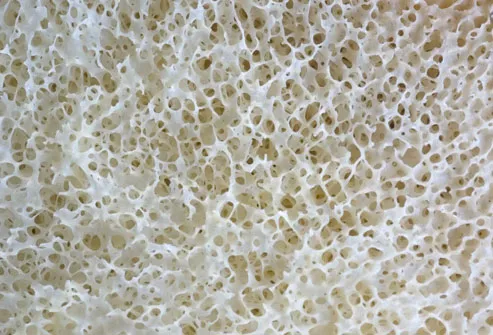
Normal Spongy Bone Matrix
Normal Porous Bone - WebMD
People need Vitamin D throughout their entire life to maintain strong bones.  A daily dose of Vitamin D alongside Calcium can help prevent the bones from becoming brittle and fracturing.  This vitamin is crucial in children for preventing rickets (bowed legs, knock knees, and weak bones).  In the 1930's they began adding the vitamin to milk to prevent rickets.
Multiple Sclerosis is an autoimmune disorder where the body attacks the nerves.  This condition is more common in locations that are farther away from the equator where there is less sunlight.   A new study links a rare gene defect that causes low levels of Vitamin D and a higher risk of MS.  However, this is not enough evidence to recommend this supplement to prevent MS.
Some recent studies have also linked low levels of Vitamin D and Type 2 Diabetes.  There may be a link between excess body fat and low levels of Vitamin D.  Right now there's not enough proof for anyone to recommend taking Vitamin D to cure the disease or prevent it.
There's a link between low levels of Vitamin D and obesity according to studies.  The body fat actually traps the vitamin which makes it less available to be absorbed by the rest of the body.  Another study suggested that adding Vitamin D to a calorie-restricted diet may help those with a vitamin deficiency lose weight easier.
There's rumor that Vitamin D deficiency is also linked to depression.  Most survey results have been mixed only one showed large doses of Vitamin D could lessen their symptoms.  For this one it's best to consult your doctor.
Eating foods rich in Vitamin D as well as getting enough sunlight are the best ways to ensure you are getting enough of what you need.  However, if you still need a boost you should look for D2 (ergocalciferol) and D3 (cholecalciferol) supplements. 
For adults age 70 and younger 600 IU (international units) is recommended.  If you are over 70 you should have a minimum daily intake of 800 IU.  While many doctors and researchers do recommend a higher dose be sure that you don't over do it.  Vitamin D is fat soluble so it's not easily eliminated by the body like water soluble vitamins.  If you take more than 4,000 IU of Vitamin D per day you risk harming your body and causing overdose symptoms like issues with your blood vessels, heart, and kidneys.
Do you think you may be deficient?  If you exhibit one or more of the following risk factors you may want to check with your doctor: 50 or older, darker skin, live in the North, overweight/obese/or had gastric bypass surgery, milk allergy/lactose intolerance, diseases/disorders like Crohn's and Celiac where it damages the liver or digestive tract.
Some medicines also deplete the body of Vitamin D.  These types of medicines are laxatives, steroids, cholesterol lowering medications, and seizure medications.  Some medicines can raise the cause other effects for example digoxin a medicine for the heart  can cause the a raise in the calcium in your blood leading to an irregular heart beat.
So how do you find out if your are in fact deficient in Vitamin D?  Your doctor or health care provider can give you a test called the 25-hydroxyvitamin D test.  This test checks the levels of Vitamin D in the blood.  In order to have good bone and overall health it's recommended to have a minimum of 20 nonograms per milliliter (ng/mL).  Most doctors recommend 30 ng/mL to make sure you get the full benefit.


Sources:
http://www.webmd.com/food-recipes/ss/slideshow-vitamin-d-overview?ecd=wnl_wmh_102414&ctr=wnl-wmh-102414_nsl-ld-stry&mb=1fvEi6fjCQIExn%40Mx3jvsOHnVev1imbC3AXI5mexUT0%3d